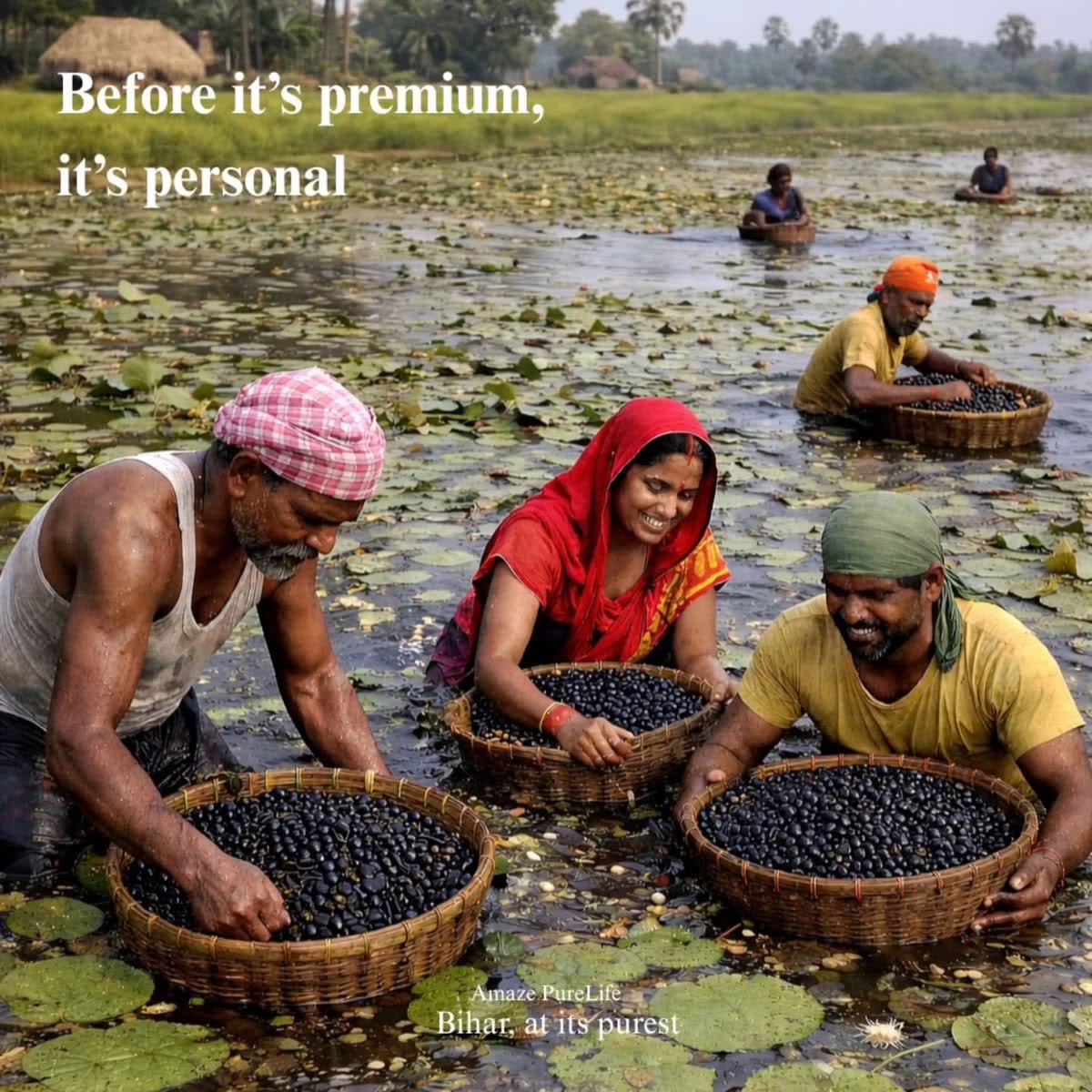
Every Makhana lot is machine-sorted and size-graded. A handpicked lot goes through one more stage: people go through the graded product by hand and pull out anything that fails on appearance — discoloured pops, burnt pieces, broken material, partially expanded kernels, anything off-size that the sieve let through.
What you are paying for
You are paying for labour, and for yield loss. Hand-selection takes time, and the material removed is a real proportion of the lot. That is the whole of the price difference. The underlying crop and the processing up to that point are the same.
When handpicked is worth it
- Clear retail packaging — the customer sees every pop before buying
- Gifting and festive ranges — appearance carries the price
- Private label where your brand carries the complaint risk
- Premium positioning where a single burnt pop undermines the shelf story
When non-handpicked is the better commercial decision
- Roasting and flavouring lines — seasoning and colour even out minor variation
- Opaque or printed packaging — nobody is inspecting individual pops
- Powder, kheer premix or ingredient use — appearance is irrelevant downstream
- Volume programmes where landed cost decides whether the line runs at all
A practical way to decide
Ask what happens to a below-standard pop after it reaches you. If it gets fried, coated, seasoned or ground, you are paying a premium for something your own process erases — buy non-handpicked. If it goes into a transparent pouch exactly as it arrives, buy handpicked and specify the defect tolerance in writing.
If you are genuinely unsure, order both against the same suta grade and run them through your line. The difference is usually obvious within one production run, and it costs far less to find out on a sample than on a container.